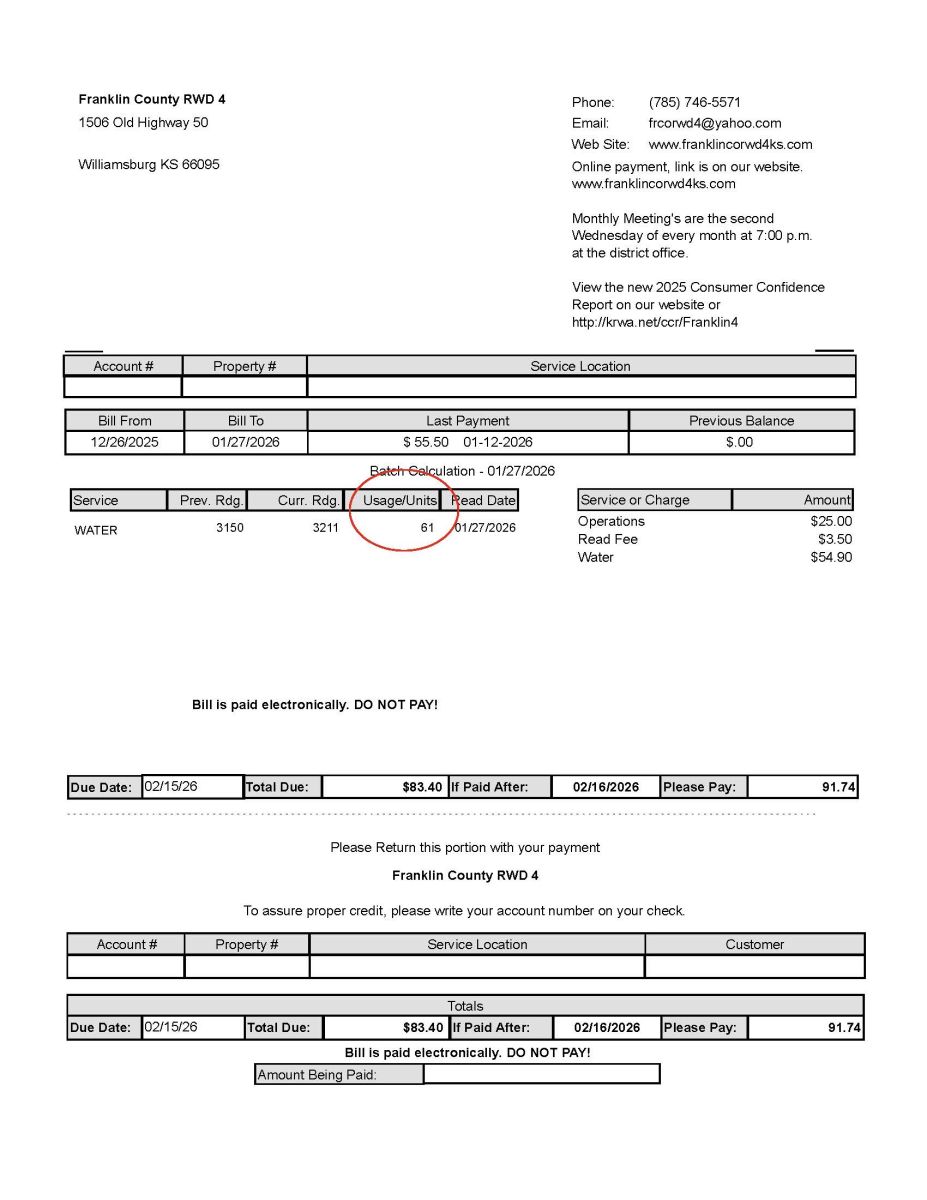
Meters are read by radio, we read in hundreths of a gallon then the readings get converted into thousandths of a gallon when we do billing. The billing example attached has usage/units of 61 this would be 6,100 thousand gallons used within the read dates.
We typically read meters around the 25th or 26th of each month. Bills are delivered around the 1st of each month. Bills are due on the 15th, a 10% late fee will be added on the 16th of each month.
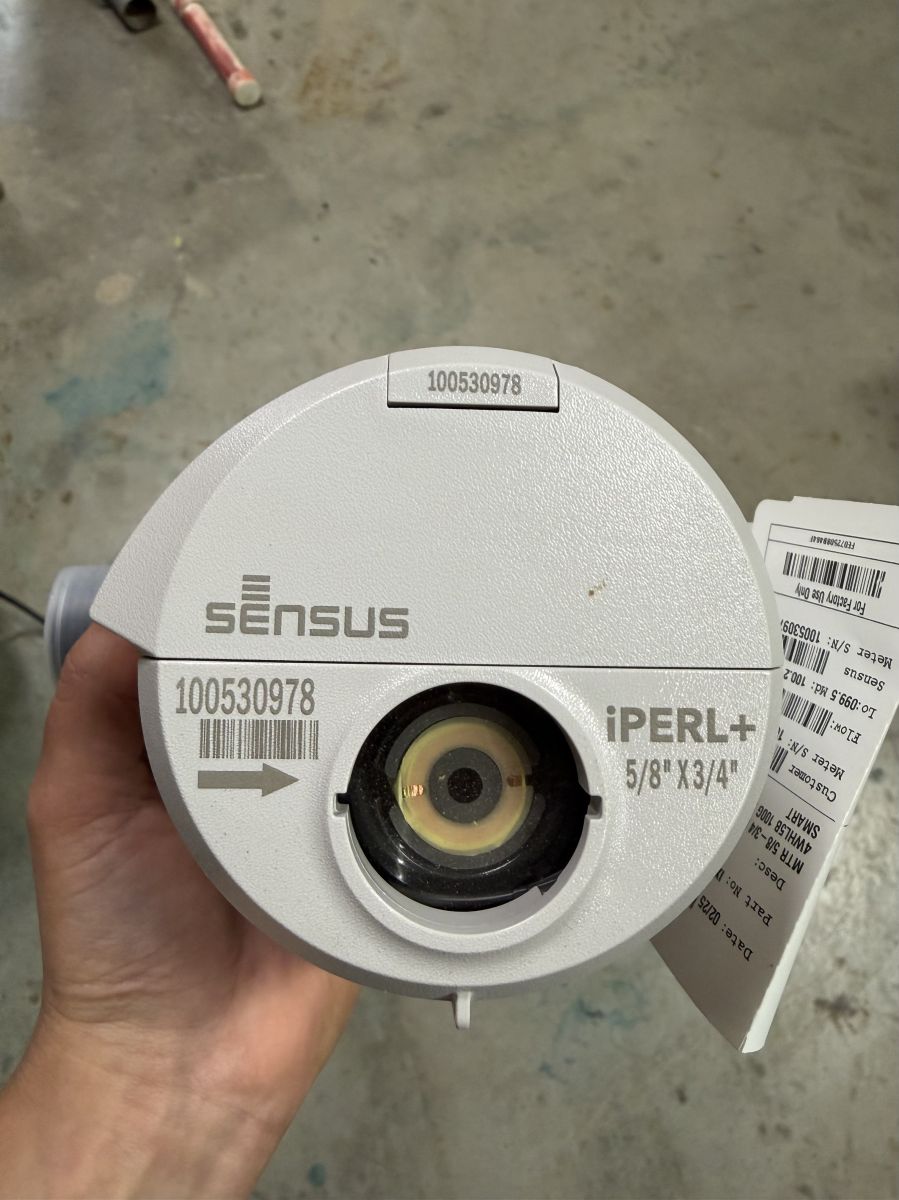
STEP 1 Locate your meter box, generally found towards the front of a property, near the road/street. The box is typically in a direct line with the main outside faucet. It is housed in a meter pit with a metal lid usually marked "water". Remove the lid by using a tool such as a large screwdriver.
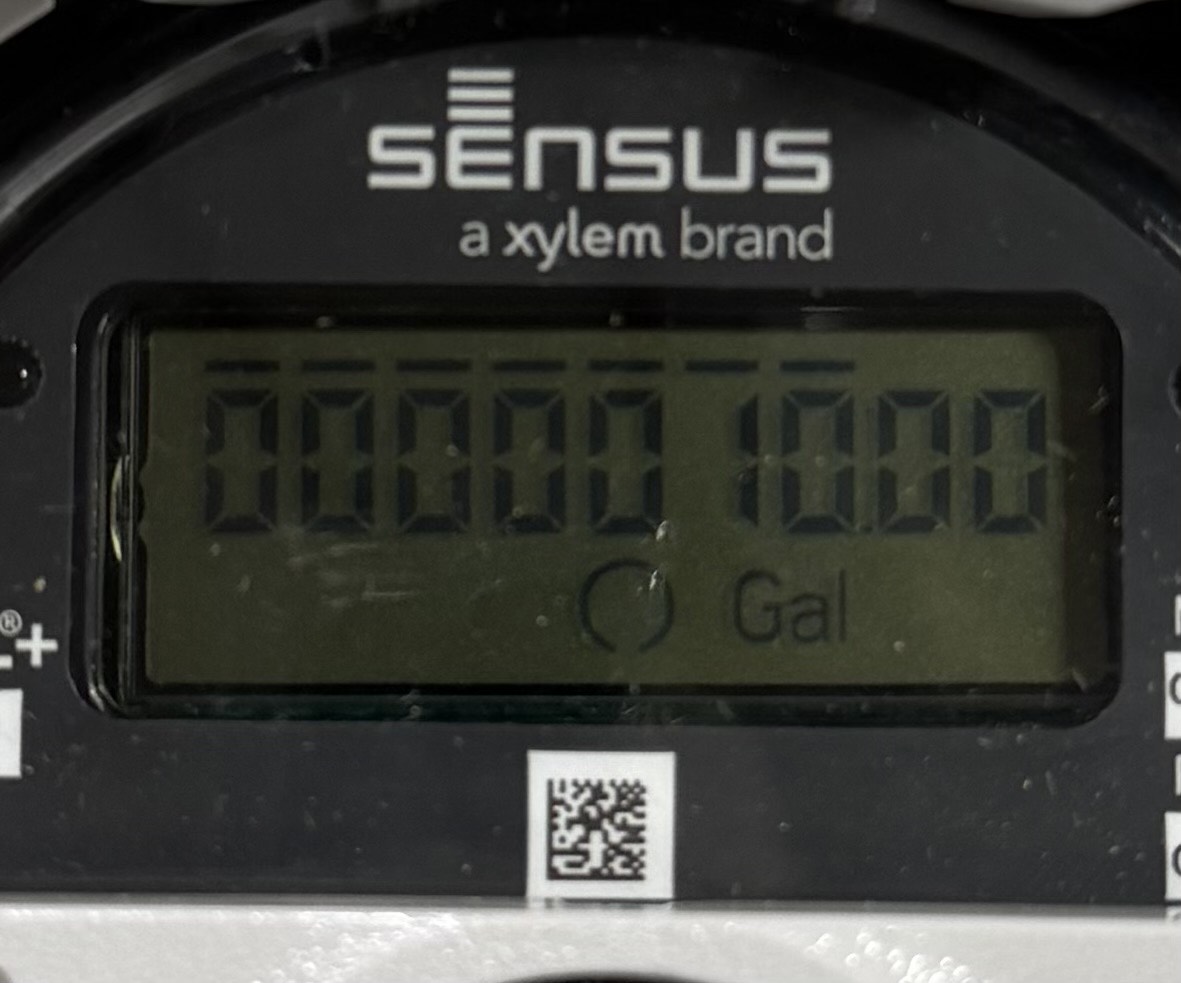
STEP 2 Once you open the meter box lid, lift the protective cap on the meter. On the face of the meter, there is a display of numbers. For the residential meter, each rotation of the dial measures 10 gallons. Read the number display from left to right. Be sure to include the stationary zero. This is your meter reading. Meters measure water in gallons or cubic feet. Charges for the amount of water consumed are rounded to the nearest thousand gallons or hundred cubic feet used during a billing period. Compare that reading to what your bill states as your current or present reading.
STEP 3 Keep in mind that you might be checking your meter on a date different from the one used for billing. This could result in a difference in the amount you find, compared with the amount on which your bill is based. However, if your reading is considerably higher than what is on your bill, check for a leak or try to determine the source of large water use. If your reading is significantly lower than the reading on your bill, please contact us and let us assist you in determining the problem.